

Babylon 5 Station is the fifth and only surviving installation of the Babylon Project — a massive Earth Alliance–led effort to create a neutral diplomatic space among the stars.
Located in the Epsilon Eridani system and orbiting Epsilon III, Babylon 5 became the crossroads of a thousand cultures and the stage upon which the destiny of the younger races was decided.
Construction & Purpose
- Post–Earth–Minbari War Initiative:
- Conceived as part of the Babylon Project after the Earth–Minbari War, to prevent future conflicts through diplomacy rather than war.
- Babylon 1–4 Precedent:
- Four earlier stations (Babylon 1–4) were lost to sabotage, accidents, or temporal displacement before fulfilling the Project’s mission.
- Their failures nearly ended the Babylon Project before Babylon 5 was approved.
- Babylon 5 Construction:
- Built under Earth Alliance leadership with major assistance from the Minbari Federation and the League of Non-Aligned Worlds.
- Construction began in 2256 in the Epsilon Eridani system; the station was declared operational in 2257 under Commander Jeffrey Sinclair.
- Mission Statement:
- Its chartered purpose was simple and ambitious: “To create a place where humans and aliens could work out their differences peacefully.”
- Babylon 5 was granted a neutral charter under Earth jurisdiction, with broad autonomy in diplomatic, security, and internal administrative matters.


Technical Specifications
Babylon 5 was designed to be self-sufficient for long-term habitation and capable of defending itself without appearing overtly militaristic to visiting powers.
- Class: O’Neill-type rotating cylinder station
- Role: Diplomatic hub, trade nexus, and regional defense outpost
- Location: Epsilon Eridani system, in orbit around Epsilon III
- Length: Approx. 8 kilometers
- Habitat Diameter: Approx. 2.5 kilometers in the main rotating section
- Crew & Population: 250,000–300,000 (Humans and multiple alien species)
- Power Source: Twin fusion reactors, auxiliary systems, and gravitic field stabilizers
- Gravity: 1.0G simulated via station rotation in primary habitats; variable-gravity zones in specialized sections
- Armament:
- Plasma pulse cannons and point-defense batteries
- Starfury fighter wings housed in multiple Cobra Bays
- Defenses:
- Reinforced hull segments and internal bulkhead systems
- Energy dispersal grid
- Hyperspace beacon array and sensor nets tied into regional defense networks

Political Significance
- Neutral Diplomatic Platform:
- Hosted permanent embassies from the Minbari Federation, Centauri Republic, Narn Regime, Vorlon Empire, and League worlds.
- Served as the first enduring, multi-power diplomatic station in known space.
- From Experiment to Power Center:
- Under Commander Jeffrey Sinclair, Babylon 5 established its reputation as a serious diplomatic venue.
- Under Captain John Sheridan, it evolved into the nerve center of resistance against Clark’s EarthGov and a key base during the Second Shadow War.
- Birthplace of the Interstellar Alliance:
- In 2261, the Interstellar Alliance charter was signed aboard Babylon 5, transforming the station into the first headquarters of a new galactic order.
Key Historical Events
- 2256–2257:
- Completion and activation of Babylon 5 in the Epsilon Eridani system.
- Commander Jeffrey Sinclair assumes command; the station opens as a diplomatic and trade hub.
- 2259:
- Captain John Sheridan replaces Sinclair as commanding officer.
- Tensions with the Narn, Centauri, and EarthGov increase as regional conflicts deepen.
- 2260 (Shadow War & Earth Break):
- Babylon 5 becomes the focal point of the alliance against the Shadows, coordinating efforts among Minbari, Narn, League worlds, and eventually the Vorlons.
- In response to the Clark regime’s authoritarian turn, Babylon 5 secedes from the Earth Alliance and declares independence, aligning with the emerging “Army of Light.”
- 2261:
- After the resolution of the Shadow War and the Earth Civil War, the Interstellar Alliance is formally founded on Babylon 5.
- The station serves as its initial headquarters and primary diplomatic venue.
- 2262–2263 (ISA Era):
- Babylon 5’s jurisdiction transitions from Earth to the Interstellar Alliance, remaining an important diplomatic, trade, and security hub.
- 2281 (Decommissioning & Destruction):
- Structural aging and safety concerns, combined with changing political realities, lead to the station’s decommissioning.
- In 2281, Babylon 5 is deliberately destroyed by remote command to prevent uncontrolled decay and misuse, its passing witnessed by former crew and allies.

Station Layout
Babylon 5 is divided into colored sectors, each with specialized functions:
- Blue Sector:
- Command and control (C&C)
- War Room and tactical coordination centers
- Council chambers and key administrative offices
- Green Sector:
- Ambassadorial suites and diplomatic quarters
- High-level reception areas and formal meeting spaces
- Red Sector:
- Docking bays, customs, and freight handling
- Commercial zones, markets, and passenger facilities (including the Zocalo)
- Brown Sector:
- Maintenance, industrial systems, and lower-priority habitation blocks
- Frequently associated with poorer districts and higher crime rates
- Grey Sector:
- Structural support systems, power conduits, and restricted engineering areas
- Lowest-profile but most critical infrastructure zones

Different sections can offer varied gravity levels and environmental conditions to accommodate species with specialized needs.
Command Staff (Babylon 5 Era)
Key figures associated with Babylon 5’s core years (2258–2262) include:
- Commander Jeffrey Sinclair: First commanding officer; instrumental in establishing the station’s diplomatic credibility.
- Captain John Sheridan: Took command during the Shadow War; led Babylon 5’s secession from Earth and later became President of the Interstellar Alliance.
- Commander Susan Ivanova: Executive officer and tactical coordinator through most of the Shadow and Earth Civil War periods.
- Chief Michael Garibaldi: Head of station security; oversaw internal law enforcement and counter-espionage.
- Dr. Stephen Franklin: Chief medical officer; central to humanitarian and cross-species medical efforts.
- Ambassador Delenn: Minbari representative and pivotal figure in both the Shadow War and the Alliance’s founding.
- Ambassador Londo Mollari: Centauri representative whose actions tied the Centauri Republic to both the Shadows and later the Interstellar Alliance.
- Ambassador G’Kar: Narn representative and eventual moral voice for many in the Alliance era.
- Ambassador Kosh Naranek (and successor Vorlons): Vorlon Empire representative; embodiment of Vorlon “guidance” and mystery.
Legacy
- “Last, Best Hope for Peace”:
- The phrase, originally a motto, became the station’s epitaph — reflecting how close it came to failure and how dramatically it reshaped history.
- Model for Alliance Diplomacy:
- Later Interstellar Alliance stations and embassies drew heavily on Babylon 5’s charter, policies, and internal structures, even when they carried different names.
- Symbol of Unity and Sacrifice:
- Its destruction in 2281 is remembered not as an ending, but as the closing of a chapter: a symbol that served its purpose and gave way to a wider, more stable network of worlds working together.
In historical records and popular memory alike, Babylon 5 stands as the place where the younger races proved they could choose their own path — without Vorlon or Shadow control.
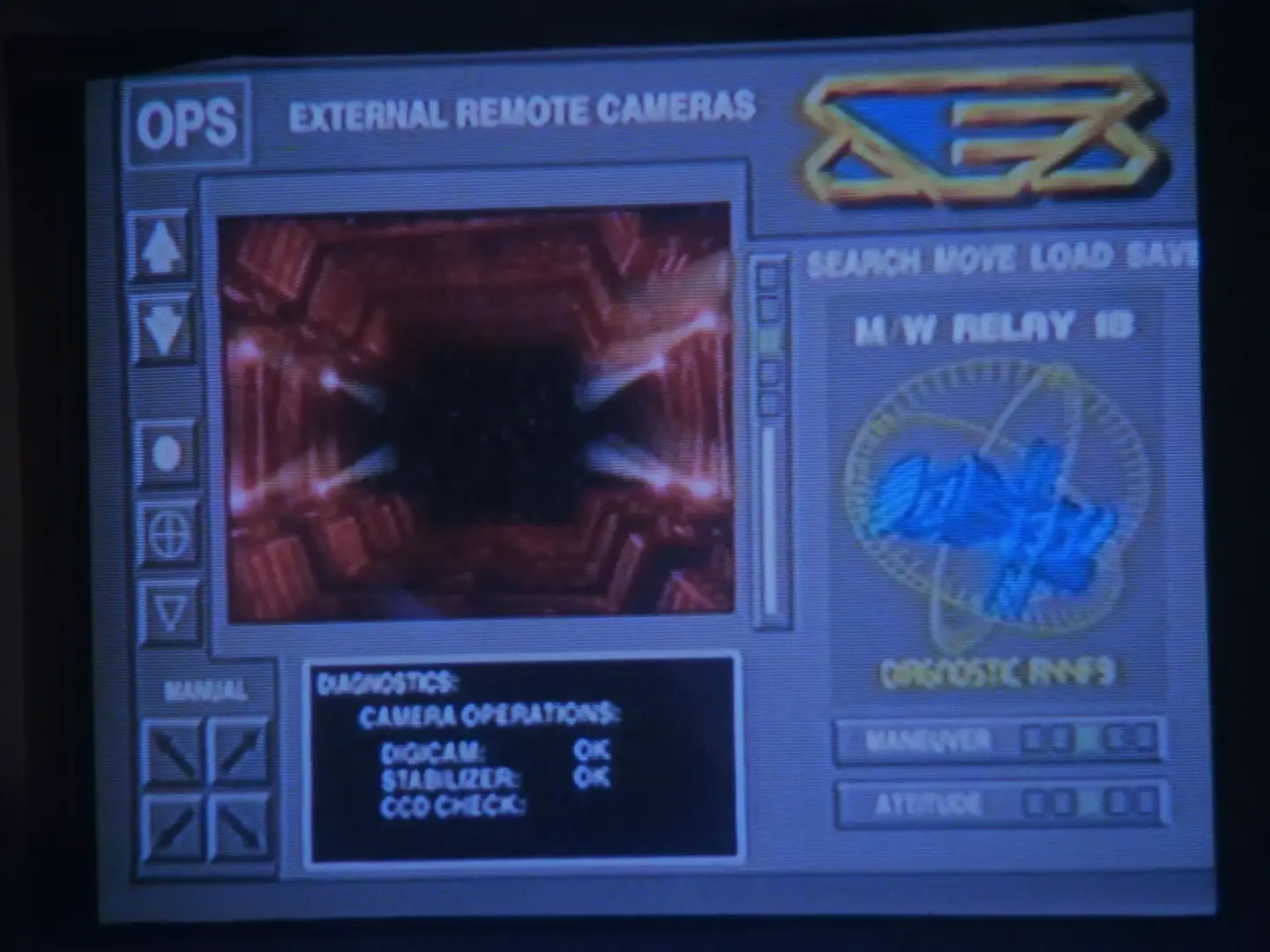
Babylon 5 Station Screenshot Gallery
Exterior










Interior










See Also
- The Babylon Project — Development Record
- Earth Alliance — Faction Overview
- Interstellar Alliance — Overview
- Second Shadow War — Historical Record
- Earth Civil War — Historical Record
- Omega-class Destroyer — Technology Record
Sources & References
- Babylon 5 episodes: “The Gathering,” “Severed Dreams,” “Endgame,” “Objects at Rest,” “Sleeping in Light”
- Reference sites: VEx (FrostJedi), B5Tech
- The Babylon 5 Encyclopedia (J. M. Straczynski, 2017)
- Expanded lore: Babylon 5 RPG and related sourcebooks for Babylon 5 technical, political, and historical details