
Mars Colony is Humanity’s oldest and most developed extraterrestrial settlement, located on the fourth planet of the Sol System.
Founded in the late 21st century as a bold first step beyond Earth, it grew into a vital industrial and military hub of the Earth Alliance.
Yet beneath its domes and deserts, Mars has always been divided — between loyalty to Earth and the struggle for its own identity and independence.
Colony Overview
- Name: Mars Colony
- Location: Sol System (fourth planet from Earth)
- Type: Terraforming / colony world
- Population: Approximately 3.2 million (as of 2262 CE, Unified Lore)
- Government:
- Under direct Earth Alliance control prior to 2261
- Autonomous colony with its own government post-2261
- Capital: Olympus Mons City
- Climate: Thin atmosphere; partially terraformed with sealed domes and limited open-air test sectors
- Primary Industries: Industrial materials, advanced manufacturing, ship components, data processing, research
- Key Facilities: MarsDome Central, Proxima Yards, EarthForce Command Sector HQ, Mars Resistance tunnel networks
Mars represents Humanity’s first great leap beyond Earth — a symbol of technological ambition, frontier hardship, and political defiance. Its deserts hide extensive tunnel systems, domed cities, and scars from both colonial exploitation and open rebellion.
Historical Development
- Late 21st Century – First Permanent Colony:
- Initial bases established under the United Nations of Earth.
- Early settlers live in pressurized habitats and underground tunnel complexes, laying the foundations of a permanent Martian population.
- Early 22nd Century – Industrial Expansion:
- Mars becomes a key hub for mining, heavy industry, and ship construction.
- Terraforming experiments begin, focusing on localized domes and atmospheric processing rather than full planetary transformation.
- Rise of Martian Identity:
- Generations born on Mars begin to see themselves as Martians first, not Earth-born humans.
- Cultural and economic tensions grow as decisions made on Earth dictate life and policy on Mars.
Tension, Repression & Resistance
- Economic Exploitation:
- EarthGov and corporate interests control major industries and infrastructure.
- Martian workers face lower political representation and fewer rights compared to Earth citizens.
- Security Crackdowns:
- EarthForce maintains a strong presence on Mars, enforcing order and protecting strategic facilities.
- The Psi Corps establishes covert operations and black sites on the planet, monitoring dissidents and experimenting with telepathic control.
- Independence Movements (2240s–2250s):
- Peaceful protests, strikes, and underground publications escalate into sabotage and armed resistance.
- The Mars Resistance emerges as a loose network of cells operating from tunnels and abandoned industrial zones.
Role in the Earth Civil War
During the Clark regime, Mars becomes a flashpoint of open rebellion against EarthGov:
- Clark-Era Repression (2258–2261):
- Martial law, blockades, and mass arrests attempt to crush independence movements.
- Psi Corps facilities on Mars are used to interrogate, reeducate, and control key figures.
- Alliance with Babylon 5:
- Elements of the Mars Resistance establish contact with John Sheridan and the Babylon 5 alliance.
- Covert support from Babylon 5 and the Rangers helps unify resistance cells and gather intelligence.
- Liberation of Mars (2261):
- Coordinated operations between the Mars Resistance and White Star Fleet forces break EarthForce’s hold.
- The victory on Mars undermines Clark’s strategic position and is pivotal in the broader Earth Civil War.
- Following Clark’s downfall, President Susanna Luchenko formally recognizes Mars as an autonomous colony.
Cities & Installations
- Olympus Mons City:
- Political and economic heart of the colony, built within a vast sealed dome complex.
- Houses MarsDome Central, colonial government offices, and major corporate HQs.
- Lowell Complex:
- Industrial center producing ship components, atmospheric processors, and other heavy equipment.
- Phobos Command Base:
- Former EarthForce orbital facility used to monitor and control Martian space.
- Later repurposed by resistance forces and, after independence, integrated into Martian defense planning.
- Syrtis Underground:
- Extensive network of tunnels, safehouses, and hidden infrastructure used by resistance operatives during the Clark years.
- Symbol of the clandestine struggle for Martian self-determination.
Post-Independence Era
- Autonomous Government:
- Mars establishes its own political institutions, security forces, and economic policies.
- While treaties maintain formal ties with the Earth Alliance, Mars asserts control over local resources and internal affairs.
- Interstellar Role:
- Mars becomes an active partner of the Interstellar Alliance, often serving as a bridge between Earth-based interests and non-Human powers.
- Independent trade agreements and research partnerships increase the colony’s strategic importance.
- Terraforming & Growth:
- Continued terraforming projects slowly expand open-air sectors, though most of the population still lives under domes or underground.
- By the late 23rd century, Mars is a thriving hub of commerce and science, with a distinct Martian culture and identity.
Legacy
- World of Defiance:
- Mars is remembered as the colony that refused to accept permanent second-class status, rising up against the Clark regime and helping to turn the tide of the Earth Civil War.
- New Human Identity:
- Martians see themselves as pioneers of a broader Human future — proof that Humanity can thrive away from Earth and chart its own paths among the stars.
- Frontier Symbolism:
- In the age of the Interstellar Alliance, Mars embodies the frontier spirit of the Human race: resilient, stubborn, and determined to define its own destiny.
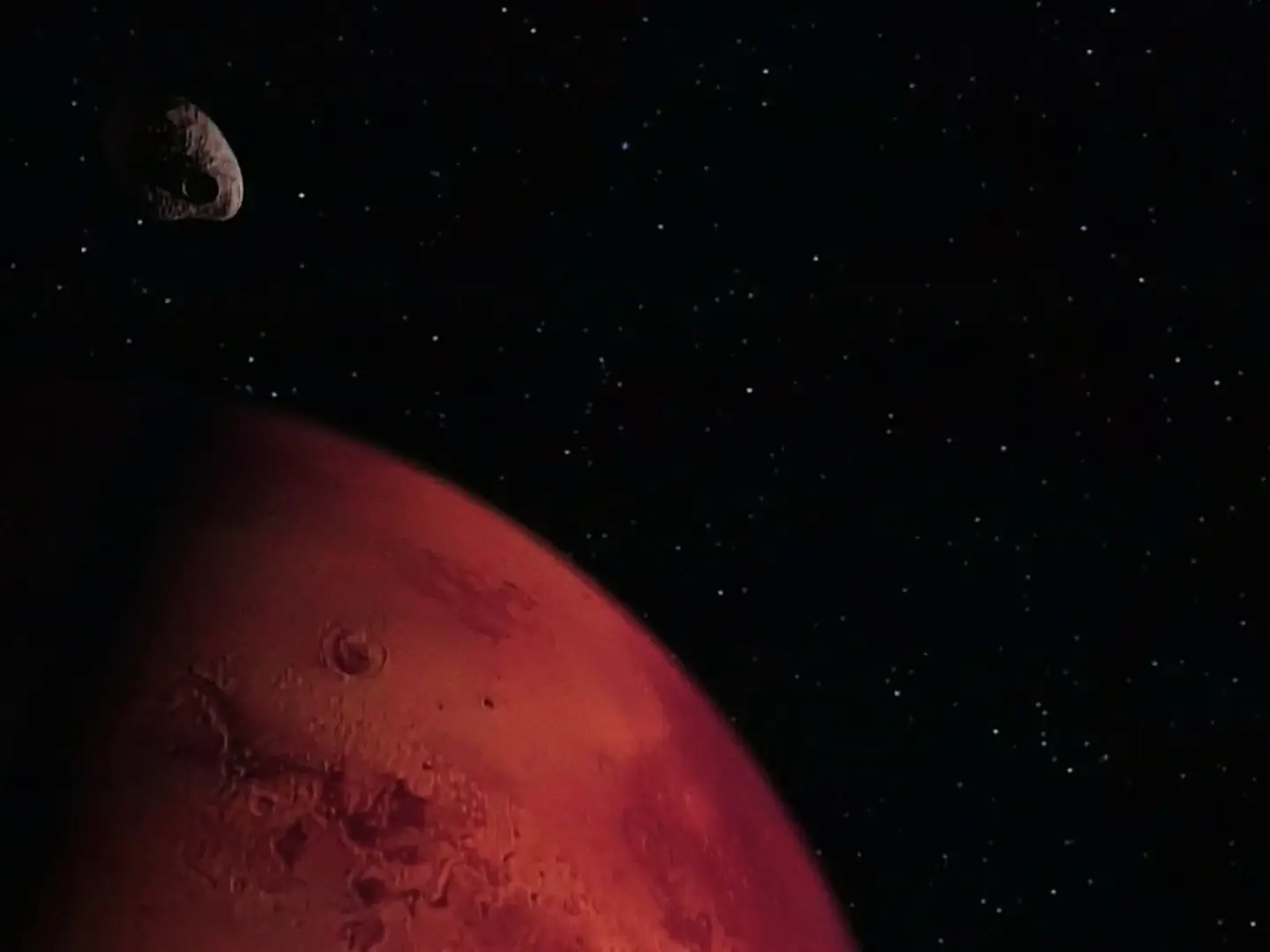
Mars Screenshot Gallery




See Also
- Earth — Location Record
- Mars Resistance — Organization Record
- Earth Civil War — Historical Record
- Psi Corps — Organization Record
- Earth Alliance — Faction Overview
Sources & Canon References
- Babylon 5 episodes: “Spider in the Web,” “Racing Mars,” “No Surrender, No Retreat,” “Endgame”
- Reference sites: VEx (FrostJedi), B5Tech
- The Babylon 5 Encyclopedia (J. M. Straczynski, 2017)
- Expanded lore: Babylon 5 RPG source material and related references for Mars Colony history and politics